
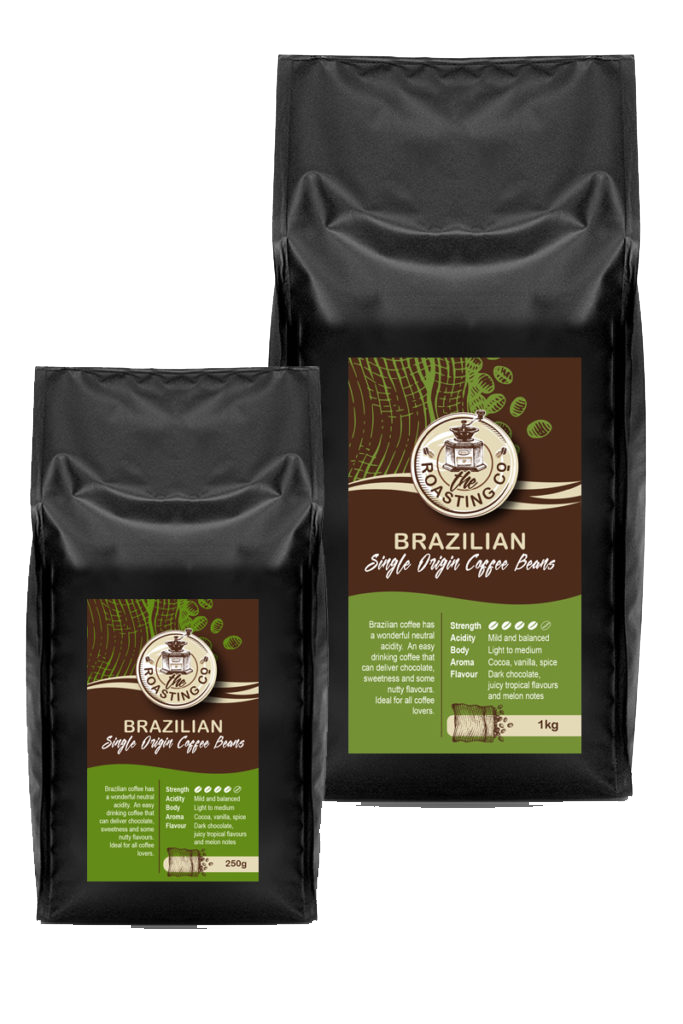
Coffee is believed to have entered Brazil in 1727 from French Guiana via Portuguese Lt. Col Francisco del Melo Palheta. The story is that he seduced the Guianese’s governor’s wife to solicit her assistance in smuggling the seeds across the border. Believe it or not, it seems to have worked!
In the early days, Brazilian coffee was mainly consumed by European colonists locally. However, as demand grew in Europe and the United States, exports started increasing. This demand caused 1802 to be a pivotal year for exports, and by 1820 Brazil was producing 30% of the World’s coffee.
Around the mid to late-1800’s, disease devastated the coffee industries of Asia, giving Central and South America the chance, it needed to really flourish as a coffee region. In the 1910’s, Brazil was growing 80% of the world’s coffee.
As other producing nations slowly recovered, that proportion came down again, but the country never lost its place as the world’s leading producer.
In the early 90’s, Brazil’s government deregulated a variety of agricultural industries, including coffee. This allowed farmers a great amount of freedom to experiment, find their own buyers, and sell how they wanted. This also opened the possibility of buying single origin coffees from the country.
This deregulation opened the gates of revolution, causing Brazil to become a world leader in coffee exploration and new processing techniques. To this day, Brazil still produces 30% of the world’s coffee beans for trade.
The most traditional Brazil coffee has been dried inside the fruit (dry-processed) so that some of the sweetness of the fruit carries into the cup. It comes from trees of the traditional Latin-American variety of Arabica called bourbon. The Roasting Company’s Santos comes from the Sao Paulo region and is top graded Santos 2.
THE HISTORY OF BRAZILIAN COFFEE
Share This Story, Choose Your Platform!
About the Author: centric










Leave A Comment