
No less than two recent medical studies suggest that drinking coffee is much healthier than popular belief would have it. One of these was a long-term study into the effects of caffeine on the central nervous system involving more than 1400 people in Sweden and Finland. People who drink three to five cups per day may have a much lower risk of developing Alzheimer’s or dementia than people who drink little or no coffee. Another study, carried out in Boston and published in the scientific journal Circulation, revealed that the risk of a stroke was reduced by 20% in people who drink more than four cups per day.
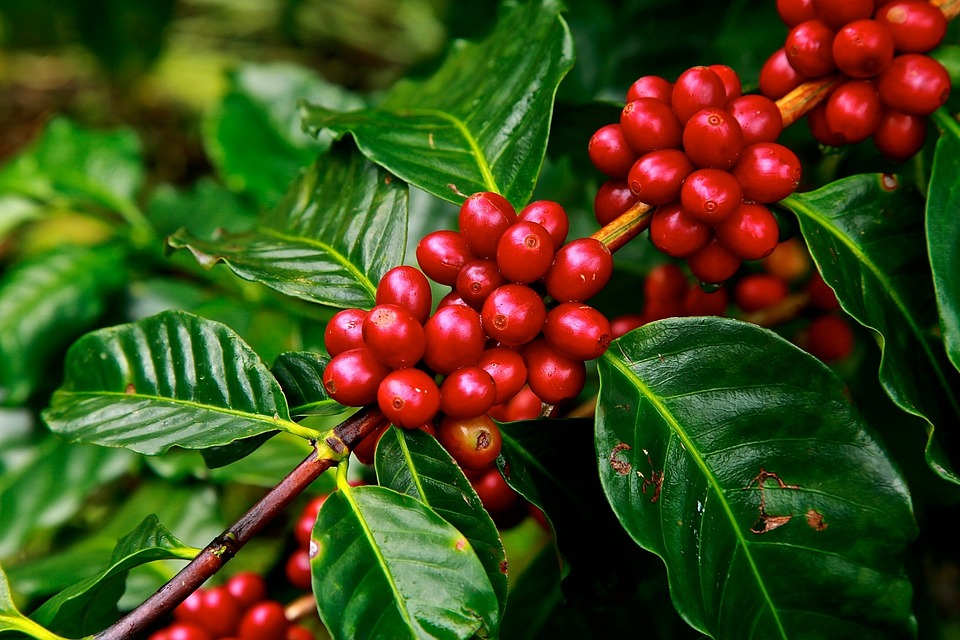
Did you know that it takes around 70 roasted coffee beans to make one cup of coffee? These 70 beans produce around 8 grams of coffee. To make this single cup, around 40 grams of coffee cherries need to be picked on the plantation. Several steps are required before the coffee beans can be roasted.
The two beans inside the coffee cherry, in fact the seeds, form the core (see illustration). During processing the pulp is completely removed, leaving the parchment, which is removed shortly before export. This process is known as hulling. Finally, all that remains is the silverskin around the bean.
During roasting the bean loses moisture, which reduces its weight by around 18% – 22%. By the time processing is complete, the weight has been reduced from the initial 40 g to 8 g.
So now you have made your coffee, what do you do with used coffee grounds? – It’s the perennial question asked after you’ve drunk your coffee.
Coffee grounds are excellent for fertilising roses and herbs. The high potassium content strengthens the plants’ natural defences and they will be less prone to pests, especially slugs and snails. Simply scatter the cold coffee grounds around the plants and after a while, mix it directly under the soil. It is good for the composition of the soil because as it decomposes it produces substances that form humus.
With thanks to Jura our partners for this valuable information.











Leave A Comment